
Si escucha un crujido proveniente del chasis del automóvil, acompañado de que el volante se desvía hacia un lado mientras conduce, podría tratarse de un problema con los bujes de la suspensión. Hoy, veremos lo que necesita saber sobre bujes de coche .
¿Qué es un buje automotriz?
En el diseño mecánico, la conexión de piezas móviles es un requisito común; sin embargo, el movimiento relativo entre componentes puede generar fácilmente fricción y desgaste. Para solucionar este problema, se utilizan ampliamente soluciones de acoplamiento flexible, que no solo reducen eficazmente el desgaste, sino que también facilitan y abaratan el reemplazo en caso de que se produzcan daños posteriormente. Por este motivo, surgieron los bujes industriales.
En el sector automotriz, los bujes son componentes de conexión elásticos y flexibles que se instalan en las articulaciones de piezas móviles como el sistema de suspensión del chasis y los brazos de control. Generalmente están fabricados con materiales elásticos como caucho o poliuretano (o una estructura compuesta que combina un esqueleto metálico con un material elástico), y su función principal es reemplazar las conexiones rígidas, solucionando así el problema de la fricción y el desgaste causados por el movimiento relativo de los componentes.
En pocas palabras, actúan como un "amortiguador y una junta resistente al desgaste" entre los componentes del chasis.
¿Cuál es la función de un buje?
Los bujes del chasis desempeñan un papel crucial en la construcción del chasis de un vehículo. Entre ellos, los bujes de los brazos de control son componentes esenciales que conectan los brazos de control al chasis y al sistema de suspensión. Su función principal es evitar el contacto rígido metal con metal, proteger los componentes circundantes, absorber golpes y vibraciones, y garantizar la estabilidad y el confort del vehículo durante la marcha.
Los bujes del chasis no solo deben soportar el peso y la inercia del vehículo, sino también hacer frente a una variedad de condiciones de carretera complejas y escenarios de conducción.
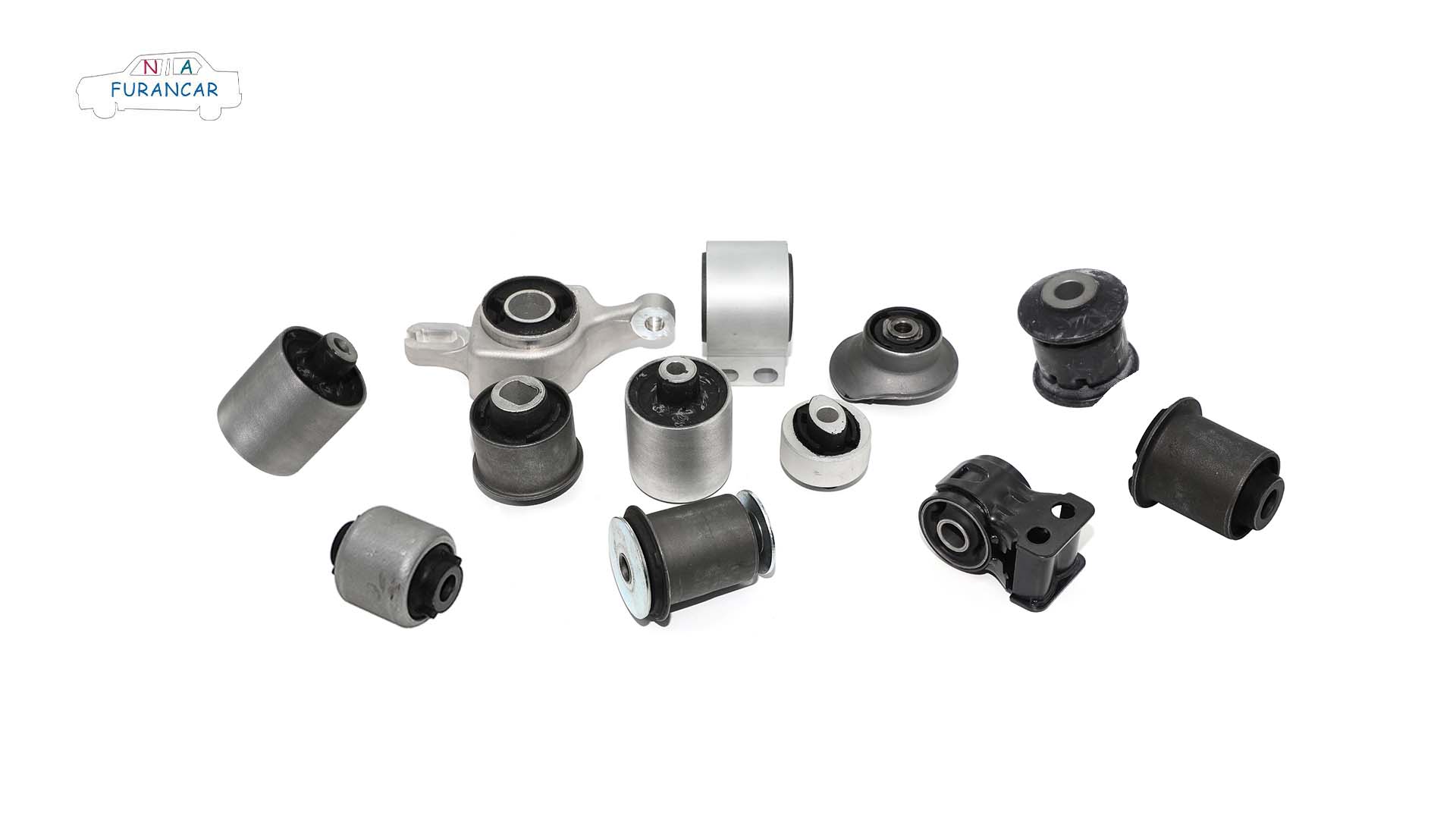
Bujes de brazo de control automático de alta calidad
Ayuda a mantener una correcta alineación de las ruedas, mejora el manejo, reduce el desgaste de los neumáticos y la fatiga de la suspensión, y proporciona a los conductores una experiencia de conducción más suave y placentera. Un sistema de bujes de chasis de alto rendimiento puede mejorar significativamente la calidad general de la conducción, a la vez que prolonga la vida útil de los componentes de la suspensión.
Los bujes del chasis se pueden clasificar en varios tipos según diferentes criterios: entre ellos se incluyen los bujes del eje delantero y trasero, los bujes de la barra de acoplamiento, los bujes del brazo de control, los bujes del subchasis, los bujes hidráulicos y no hidráulicos, así como los bujes metálicos y de nailon, y los bujes abiertos y cerrados. Si bien las clasificaciones varían, sus funciones son similares.
Aspectos a tener en cuenta al reemplazar los bujes
1. Selección de manguitos de ajuste a presión
Al desmontar o instalar componentes, seleccione un casquillo del tamaño adecuado para asegurar que la fuerza se aplique al anillo exterior del buje, mientras que las demás piezas permanecen sin carga. Utilice gafas y guantes de seguridad al realizar este trabajo. La información dimensional que se proporciona en el manual del producto Codic puede ayudarle a seleccionar el casquillo correcto.
2. Fuerza de ajuste a presión
Para facilitar la instalación, elimine cualquier rebaba del orificio interior antes de prensar y aplique una pequeña cantidad de lubricante (como grasa 4240) al orificio interior y a la sección inicial del diámetro exterior. Asegúrese de que la fuerza de prensado no sea demasiado baja; para casquillos con un diámetro de tubo exterior de 40 mm, la fuerza de prensado para tubos exteriores metálicos generalmente debe superar los 6 kN, y para tubos exteriores de nailon, debe superar los 20 kN, con valores que varían según el diámetro del tubo exterior. Si la fuerza de prensado resulta ser demasiado alta o demasiado baja, compruebe el estado del orificio interior y verifique que se haya seleccionado el casquillo correcto.
3. Confirmación de la posición de instalación
Durante la instalación, asegúrese de que la sección sólida esté alineada con la dirección horizontal de desplazamiento. Si el producto incluye una flecha, verifique que esta apunte en la dirección horizontal de desplazamiento. Asegúrese de que la posición de presión esté centrada, con longitudes iguales que sobresalgan de ambos extremos.
4. Alivio del estrés
Una vez finalizada la instalación con el vehículo elevado, suelen producirse concentraciones de tensión en el chasis. Para solucionarlo, es necesario bajar el vehículo al suelo y centrar el volante. A continuación, se deben aflojar los tornillos al par de apriete especificado y volver a apretarlos al par estándar para liberar la tensión y permitir que el chasis recupere su estado original. En este punto, el vehículo estará como nuevo, listo para rodar con total libertad.


 Whatsapp :
  Teléfono :
  Correo electrónico :